
What 3 Tons of Relief Material Taught Me About Logistics and Leadership
This post is part of my Beyond Business series, where I explore the human leadership lessons found outside the traditional corporate office.
We tend to think that Social work is for retired people or rich people with passive income. I beg to differ. After my experience in providing relief and rehabilitation in Tamil Nadu, I strongly feel that every entrepreneur should spend some time in trying to solve social problems. The experience will provide invaluable lessons in building their businesses – lessons that are never taught in Business Schools or learnt in the ordinary course of life
We often talk about “operations” and “logistics” in the context of IT systems or supply chains. But the most critical project management test of my life wasn’t in a boardroom—it was in the aftermath of the Tsunami.
Phase 1: The Logistics of Immediate Relief
After the disaster, I felt compelled to act. I travelled to Chennai as part of an NGO and we started relief work in Cuddalore district along with Ravi Singh of Khalsa Aid, UK. This organization is known the world over for their humanitarian relief work in the worst of the areas. In fact, in 2023 Ravi Singh was nominated for the Nobel Peace award.
A few days later, we got an SOS from Campbell Bay at Southernmost tip of the Andaman & Nicobar Islands southernmost tip and one of the most affected areas. Ravi Singh immediately left for Port Blair, but was refused permission to travel to Campbell Bay as he was a British passport holder. There was no way he could send relief material unaccompanied. He called me and requested me to go to Campbell Bay with material. That was the day when I was to return back to Mumbai, having spend over 10 days in Tamil Nadu. Sensing the urgency of the situation, I agreed and changed my plans to come back.
The logistical challenge was immense: personally transporting and distributing over <strong>3 tons of relief material</strong> using various modes of transport to reach remote locations. I met with the then Governor of Andaman & Nicobar islands – Mr Ram Naik, a fellow Mumbaikar. With an authority letter from His Excellency, I managed to secure passage on a ship departing for Campbell Bay and accomplish my mission.
Phase 2: The Strategy of Rehabilitation
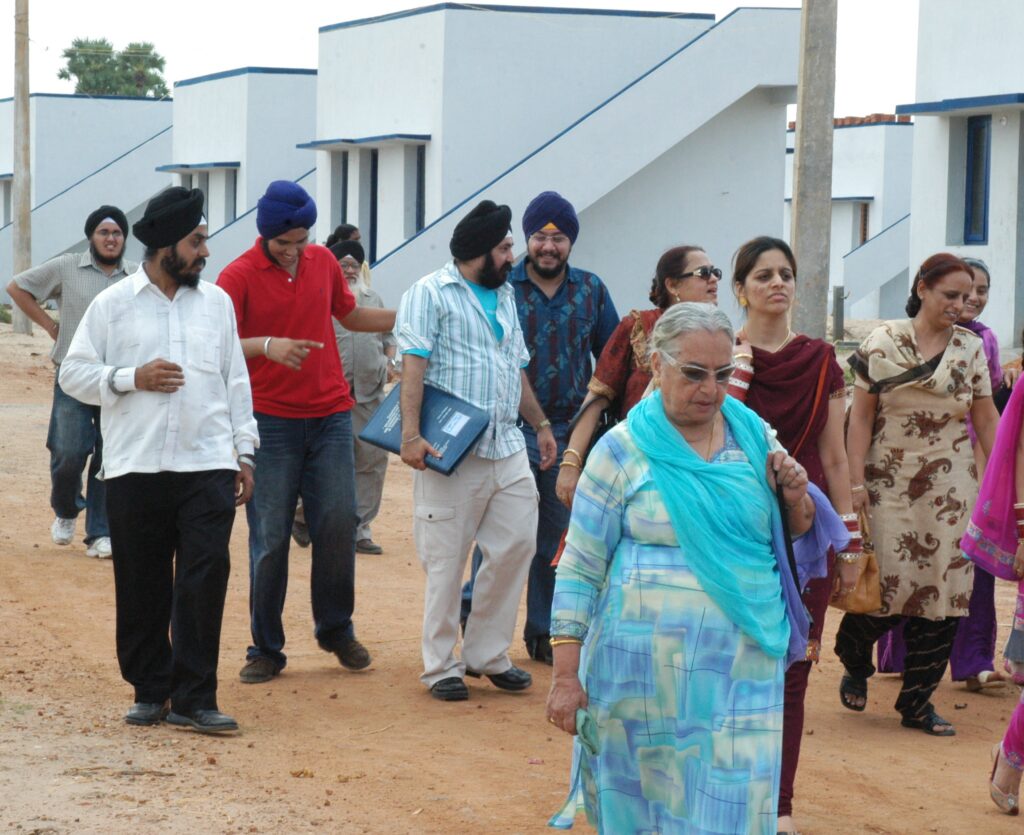
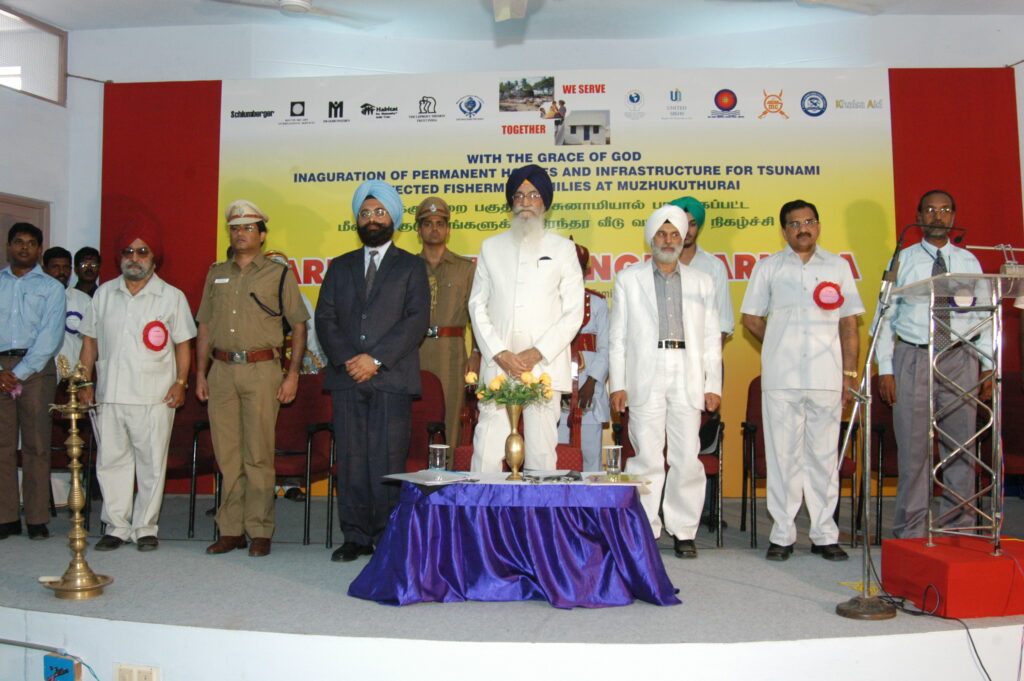
Immediate relief is vital, but sustainable recovery requires a long-term strategy. I spent the next two years working in the Cuddalore district of Tamil Nadu to rehabilitate Mullukuturai village.
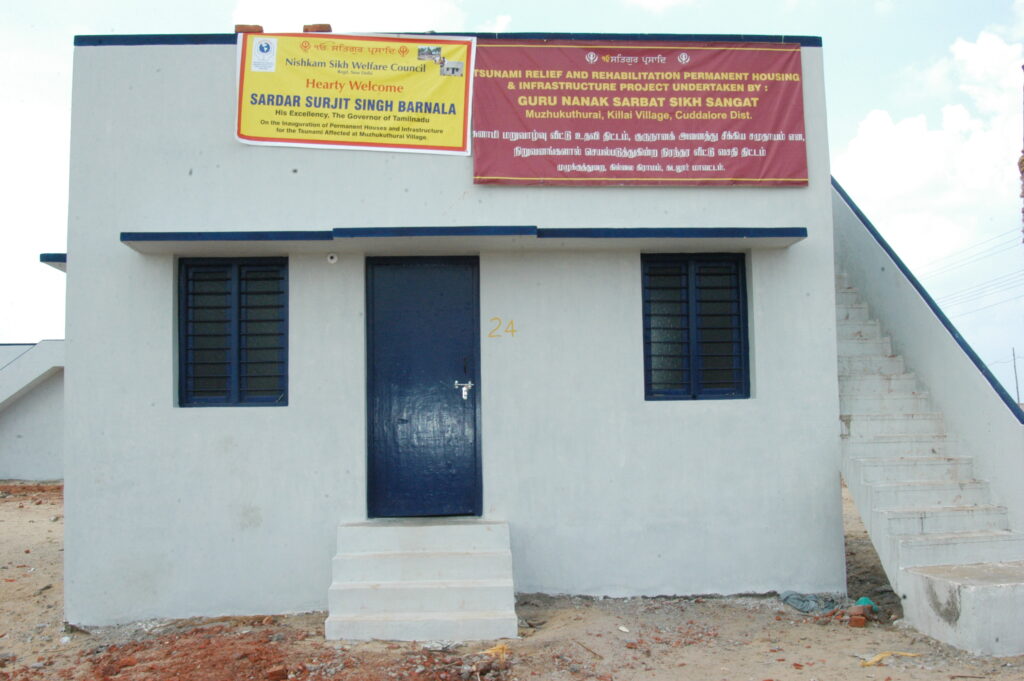
This wasn’t just about construction; it was total redevelopment. It required:
Liaison: Liaison: Working with government agencies for land and permissions. This was our biggest hurdle. We had to purchase land from the villagers to build a new village away from the coastline. The local villagers were skeptical about our intentions and were reluctant to believe that we were building permanent houses for them free of cost. While the TN govt had waived off stamp duty on purchase of land for rehabilitation, we still had to pay registration charges.
Planning: Supervising town planning and identifying genuine beneficiaries to ensure aid reached those who needed it most. The government had laid down strict norms for developing the township and we had to build common amenities like a Community Hall and a Primary Health Center in addition to the houses. In order to comply with the guidelines for building houses, we hired an architect from Chennai who helped us with the layout, design and the blueprints.
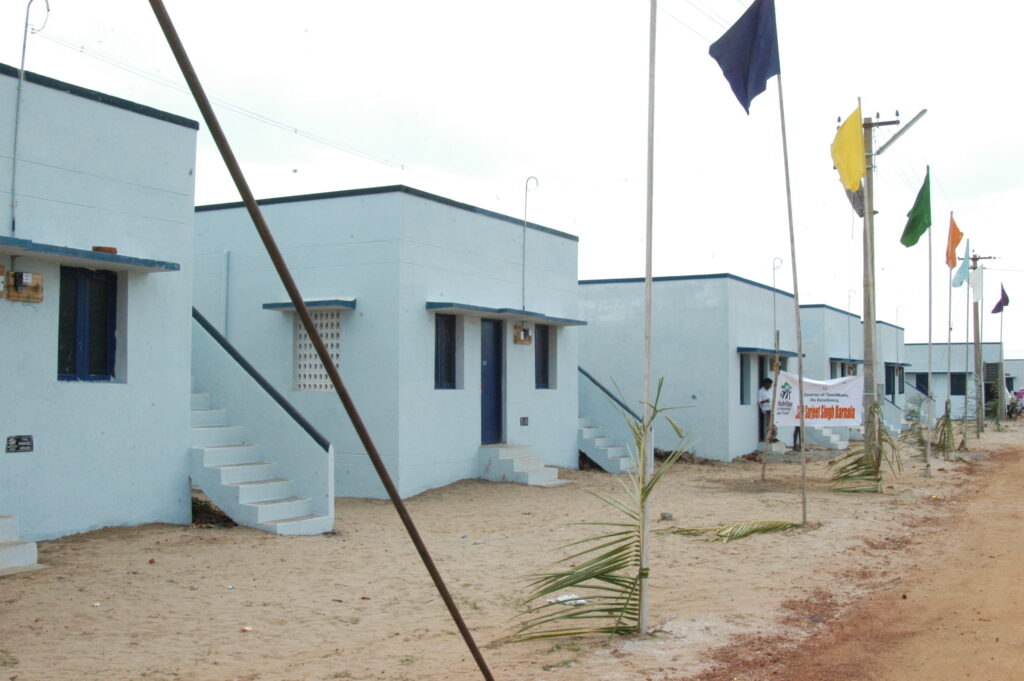
Execution: Constructing 150 new houses, a Community Hall, and a Primary Health Centre. Construction took over 2 years during which we faced various challenges. On e of the challenge was getting skilled and unskilled labour. Ultimately, fed up with the unprofessional conduct of the local contractors and labour, we partnered with a Sewak Jatha from Punjab who were experienced in reconstructing historical Gurudwaras. During this phase, I travelled to the site every fortnight. I even managed to understand Tamil – a daunting task for a North Indian.
The Takeaway
During the execution of this project, I worked with other volunteer businessmen from diverse backgrounds and learnt a lot about doing business ethically. The sharing was uninhibited because there was a sense of belonging as we were all working towards a common goal.
I acquired many of my soft skills working along side other professionals, specifically I consider Mr. Rajinder Singh Bhasin of Janta Roadways as my professional mentor. I met this soft-spoken gentleman for the first time when I reached Chennai in early January 2006. Since then, he was our host and we enjoyed his hospitality every time we went to Chennai and from there to Mullukuturai. He owned a company which had a fleet of around 200 vehicle carrier trucks and I learnt a lot from him and was impressed by the way he treated his team of truck drivers. He was equally at ease whether discussing operations with his team or negotiating with top honchos of all the major vehicle manufacturers of the country. As President of Chennai Goods Transport Association, he was held in high esteem by fellow transporters .
This experience reinforced my belief in values-based leadership. Whether managing IT infrastructure, scaling EdTech operations, or rebuilding a village, the core principles remain the same: identify the problem, mobilize resources, and execute with integrity.
I am proud to have played a small part in rebuilding lives in Mullukuturai, and gained a lot in the process.
Ravinder Singh is a technology entrepreneur with over 35 years of experience in IT and EdTech. He is dedicated to exploring the intersection of business strategy and human impact. Through the “Beyond Business” series, he shares lessons learned from the frontlines of crisis management and social rehabilitation, believing that true leadership is defined by what we build for others when the office lights go out.