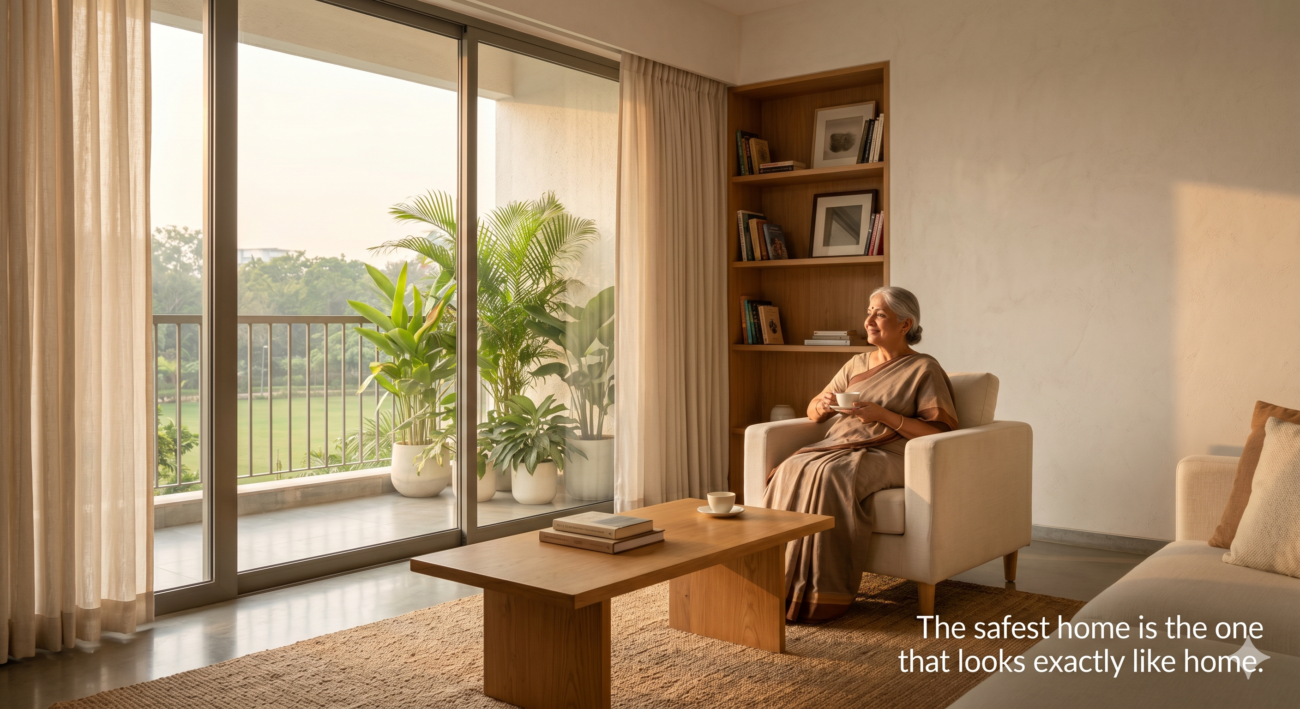

For decades, “ElderTech” has been defined by the “Panic Button”—a plastic pendant that sits around a neck, serving as a constant, clinical reminder of frailty.
As a technology entrepreneur who has spent 30 years scaling IT infrastructure and electronic security, I’ve realized we’ve been looking at the problem through the wrong lens. We have been designing for surveillance, when we should have been designing for dignity.
The Problem: The “Big Brother” Tax
Most current solutions for eldercare are intrusive. They require the user to learn a new interface, wear a device, or—worst of all—accept cameras in their private spaces. This creates a “tech tax” on the elderly: to stay safe, they must surrender their privacy and admit they can no longer manage their environment.
I believe the future of the Silver Economy isn’t in more gadgets. It’s in Invisible Automation.
The Solution: Sensing, Not Searching
“Invisible” technology doesn’t ask the senior to change their behavior. Instead, the environment adapts to them. Using the latest in AI-driven logic and protocols like Matter and Thread, we can create a safety net that is felt, but not seen:
Circadian Lighting: Lights that don’t just turn on/off, but shift in color temperature to regulate sleep-wake cycles, reducing the confusion of sundowning.
mmWave & Ultrasonic Sensors: Detecting a fall or a change in gait without a single camera lens or wearable device.
Predictive Maintenance: Using power-consumption patterns to know if a kettle was left on or if a refrigerator is failing, preventing domestic accidents before they happen.
The Bridge: Reliability and Ethics
Transitioning from “smart homes” to “care homes” requires more than just hardware. It requires operational excellence and ethical governance.
Coming from a background of managing mission-critical infrastructure and disaster rehabilitation, I know that in eldercare, a “system glitch” isn’t just a support ticket—it’s a life-safety issue. As we integrate AI into the homes of our parents, we must ask:
Who owns the data?
Is the automation truly non-intrusive?
Does this technology empower independence or create dependency?
My Mission
I’ve spent my career bridging the gap between complex technology and human-centric operations. Today, my focus is on advising the next generation of startups to build tech that respects the “Silver” generation.
We don’t need more “gadgets.” We need a home that listens, learns, and protects—silently.
The Invisible Caregiver Manifesto